PARI-DAR — Inspired by the Winged Horse

The Symbol Behind the Design
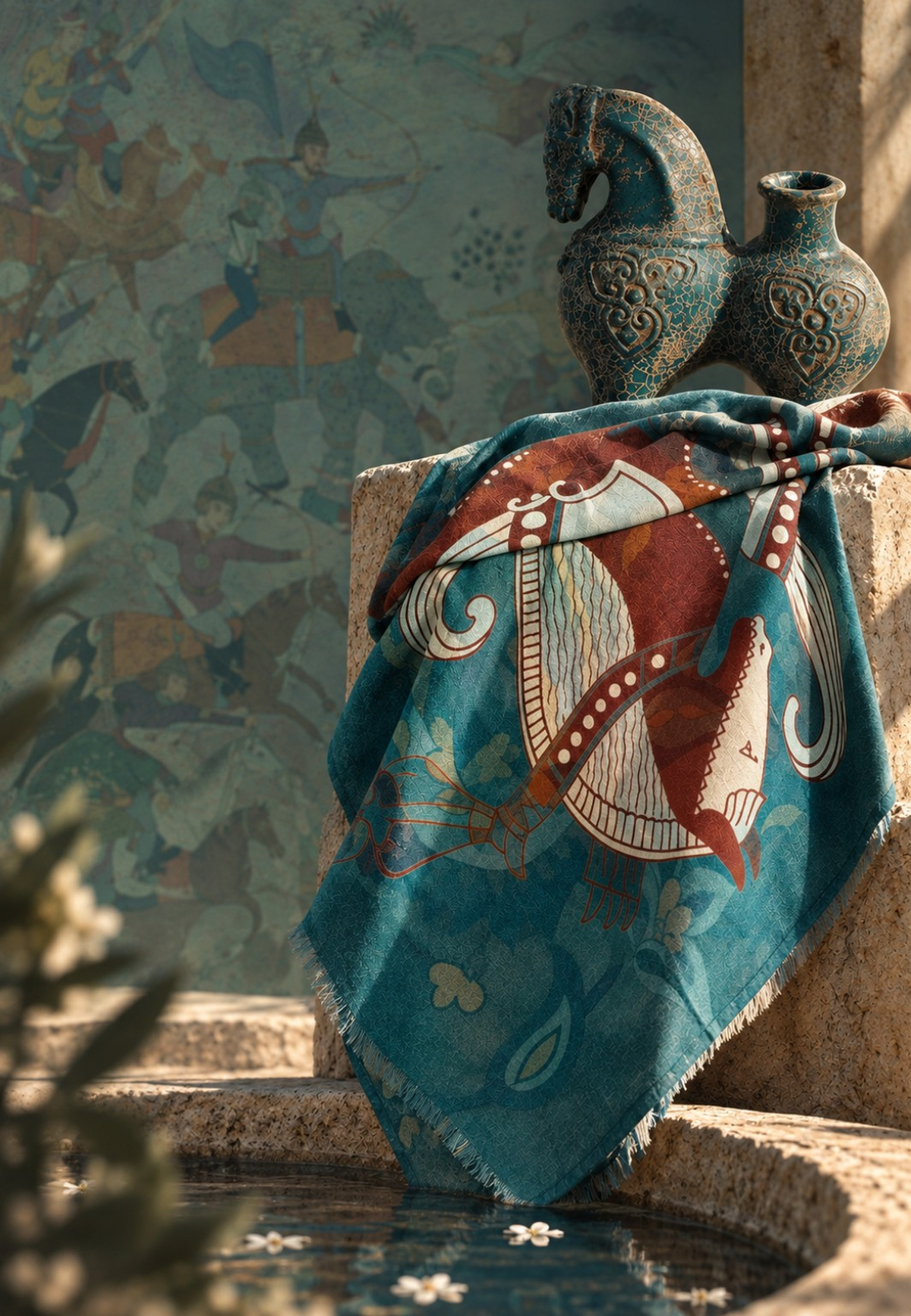
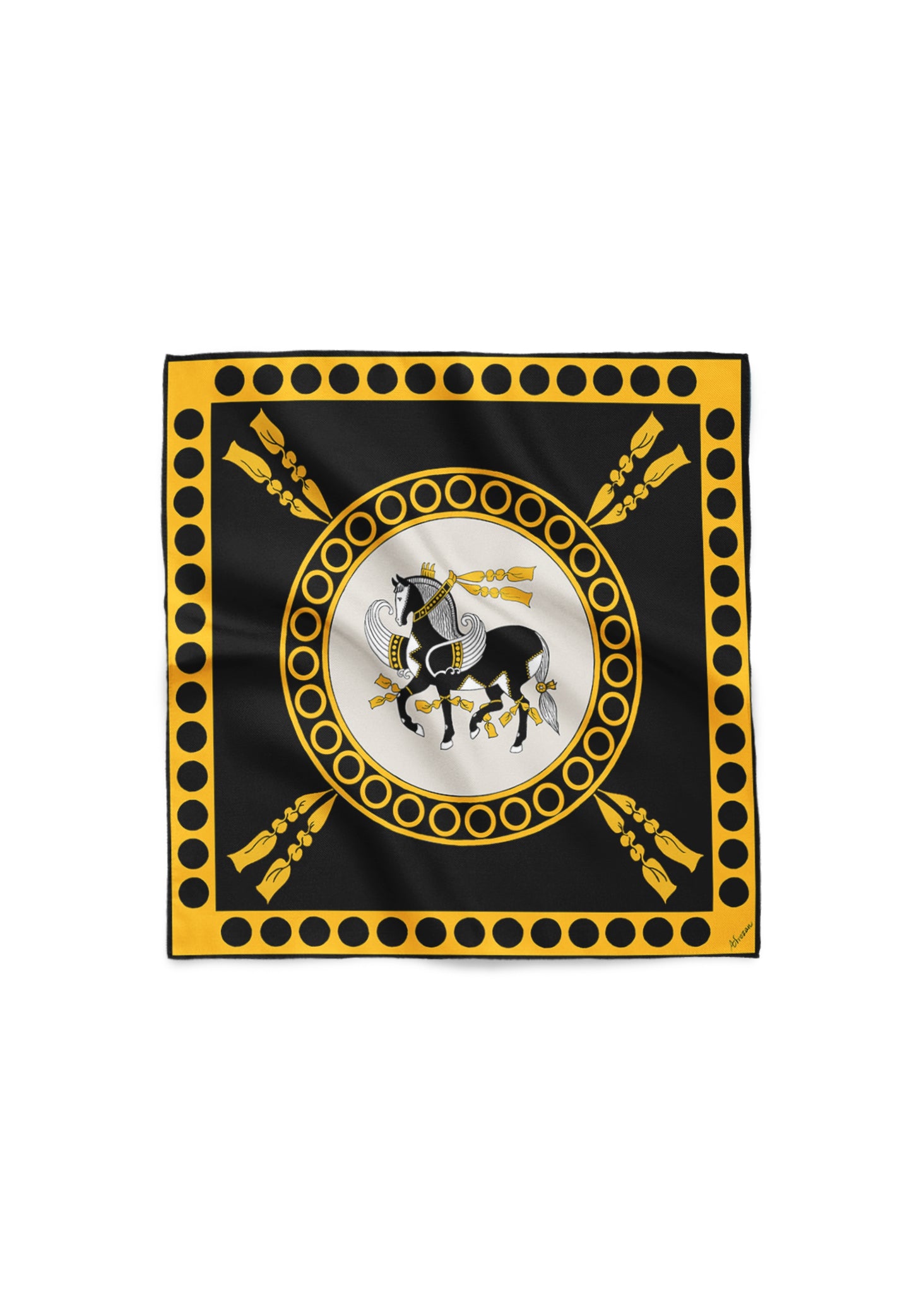
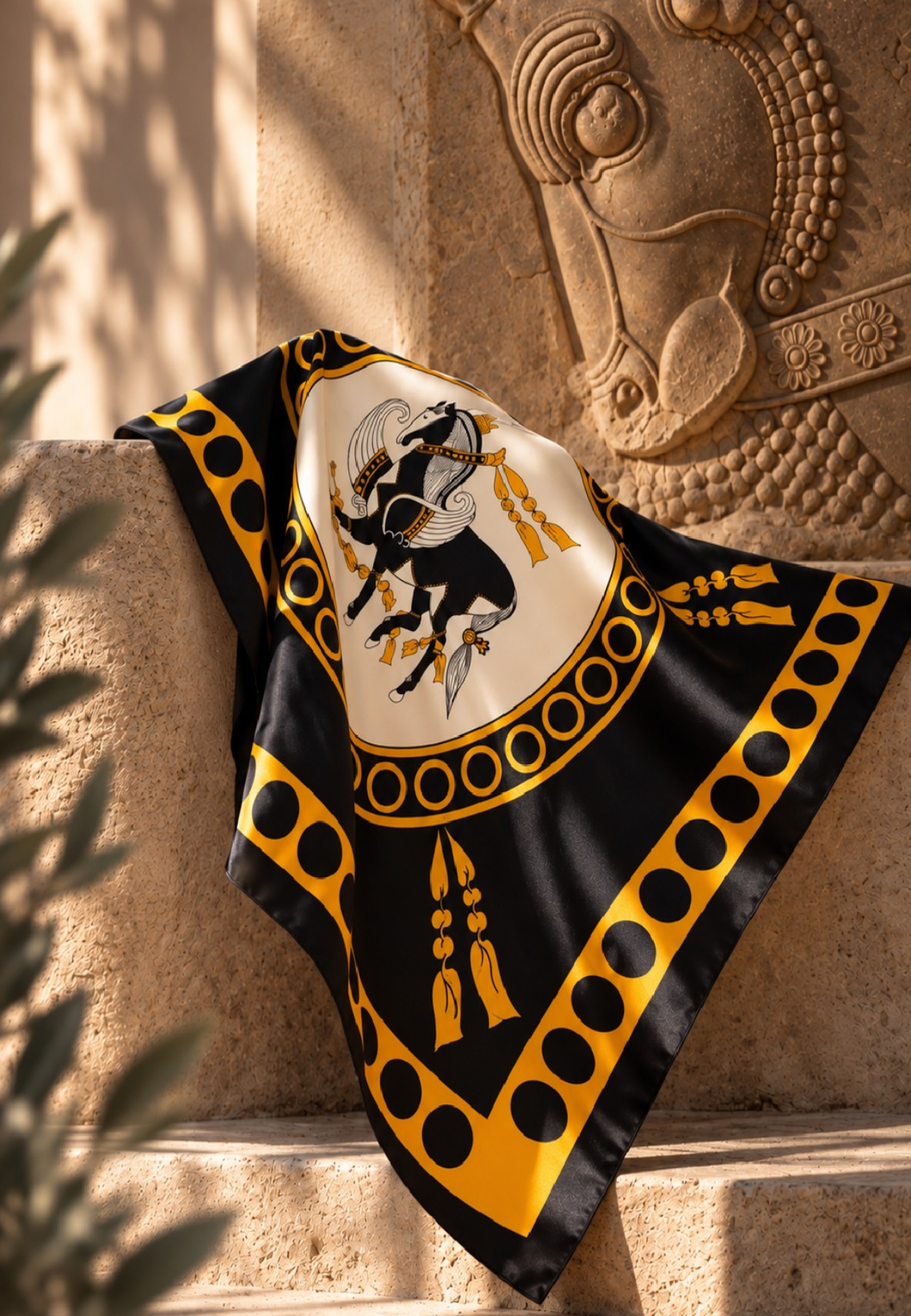
PARI-DAR draws inspiration from the winged horse, a powerful motif found throughout the artistic traditions of ancient Iran. Associated with movement, strength and transcendence, the winged horse has appeared in Iranian visual culture across different periods and artistic forms. For AFROZAN, this ancient image becomes a starting point for exploring the relationship between mythology, movement and contemporary design.

Rather than reproducing a historical figure literally, PARI-DAR interprets the spirit of the winged horse through rhythm, movement, ornament and composition, transforming an ancient visual language into a contemporary silk and cashmere accessory.

The Winged Horse in Iranian Art

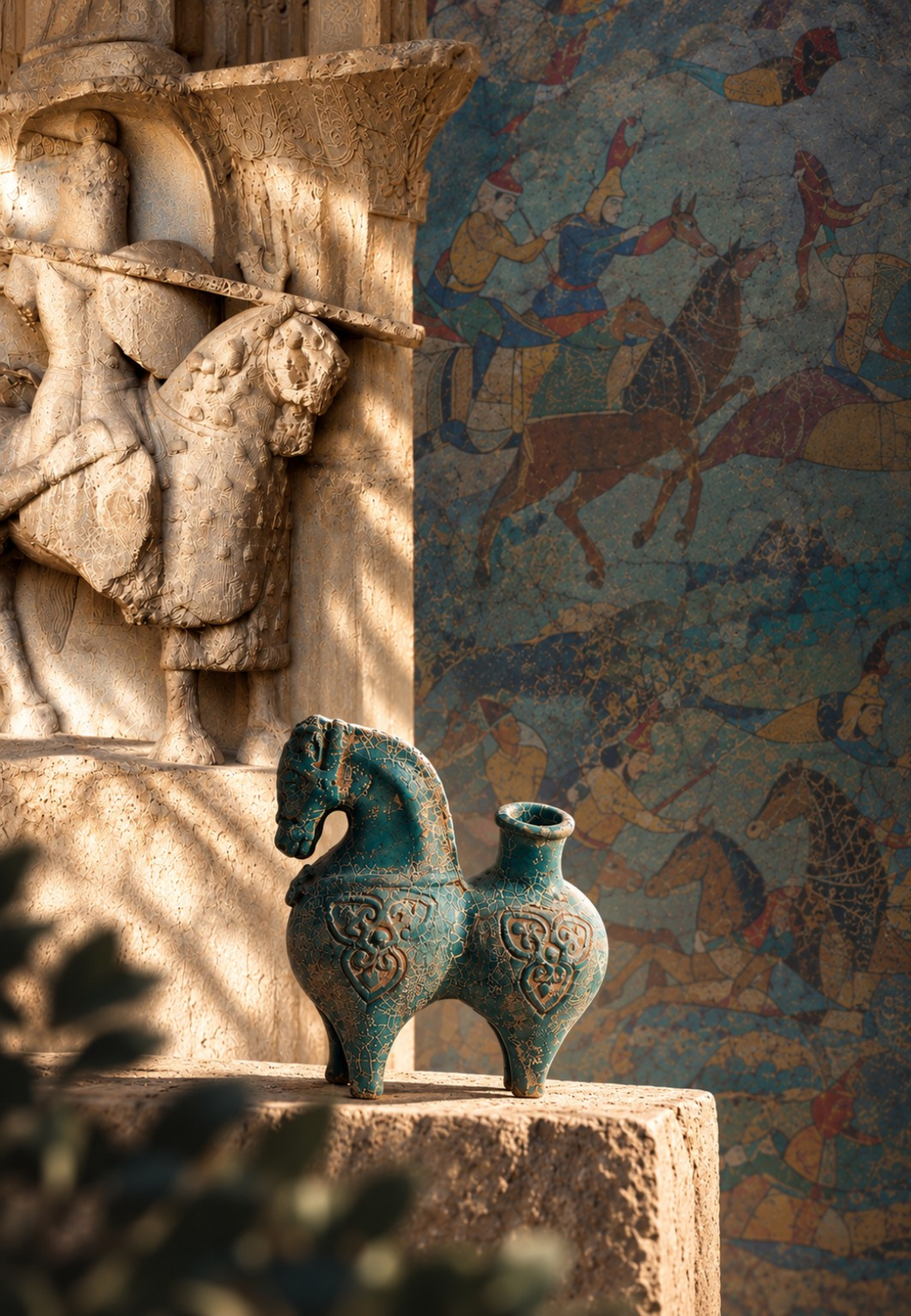
The winged horse is one of the striking animal motifs found in the artistic heritage of Iran. Its image appears in different forms and periods, from ancient objects and decorative arts to the highly refined visual language of the Sasanian period.

In Sasanian art, winged horses appear on textiles, metalwork and other objects, often presented as part of carefully organised decorative compositions. Their bodies, wings and movement become elements of a larger visual rhythm rather than simply representations of an animal.

This transformation of the horse into a symbolic and decorative figure is central to the inspiration behind PARI-DAR. The motif carries a sense of movement and power while remaining deeply connected to the visual traditions of Persian art.

The Met specifically documents a Sasanian textile, dated approximately to the 5th–7th century CE, decorated with repeating winged horses in pearl roundels.

Movement and Flight

The horse has long been associated with movement, strength and freedom. Adding wings transforms this familiar animal into something beyond the physical world — a creature capable of crossing boundaries between earth and sky.

For PARI-DAR, this idea of movement is more important than a literal depiction of a winged creature.

The composition explores flowing forms, directional lines and repeated elements that create a sense of motion across the surface. The scarf becomes a moving canvas, changing as it is folded, wrapped and worn.

The ancient image therefore takes on a new life through movement: what was once represented in stone, metal or textile becomes something that moves with the wearer.

A Motif Transformed Through Pattern

Historical Iranian art often transforms animals and natural forms into highly structured decorative motifs. The winged horse is not simply an isolated figure; it becomes part of a visual system in which repetition, symmetry, framing and ornament create a sense of harmony.

PARI-DAR follows this principle.

The winged horse becomes a starting point for pattern rather than an image to be copied. Its silhouette, wings and movement are translated into a contemporary composition in which the individual motif interacts with the surrounding forms.

In this process, historical imagery becomes design language.

From Ancient Symbol to Contemporary Expression
AFROZAN approaches cultural heritage through interpretation rather than reproduction.

PARI-DAR does not attempt to recreate a historical Iranian textile or archaeological object. Instead, it looks at the visual ideas that made the winged horse such a compelling motif: movement, balance, rhythm and transformation.

The historical symbol is therefore taken out of its original context and reconsidered through contemporary fashion.

What was once an image of a mythical or symbolic creature becomes a visual language for movement, individuality and freedom.

From Heritage to Textile

PARI-DAR translates the visual energy of the winged horse into a large square designed to be experienced through movement.

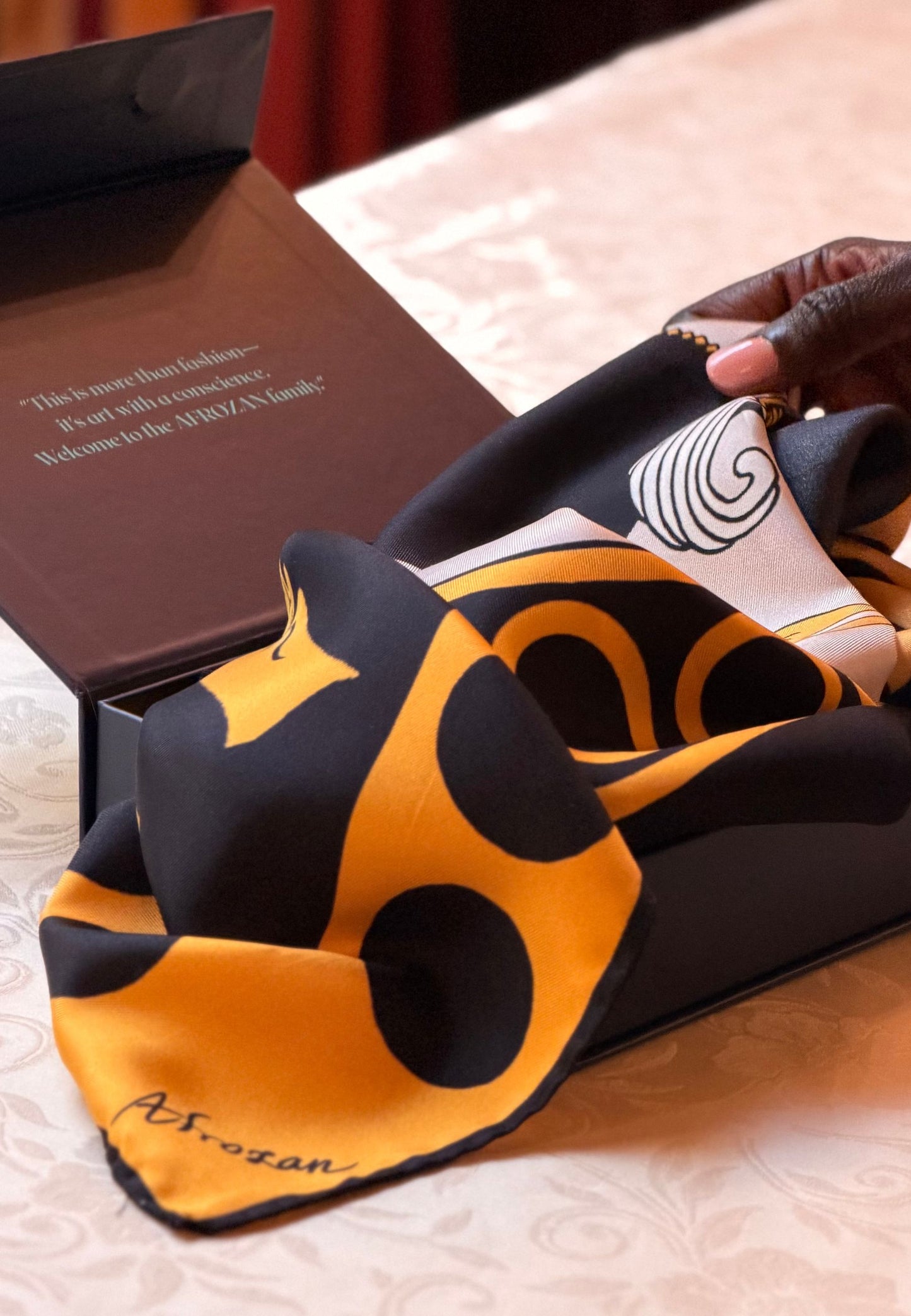
The generous proportions allow the composition to unfold across the surface, while the softness of the cashmere, wool and silk blend gives the design a tactile dimension.

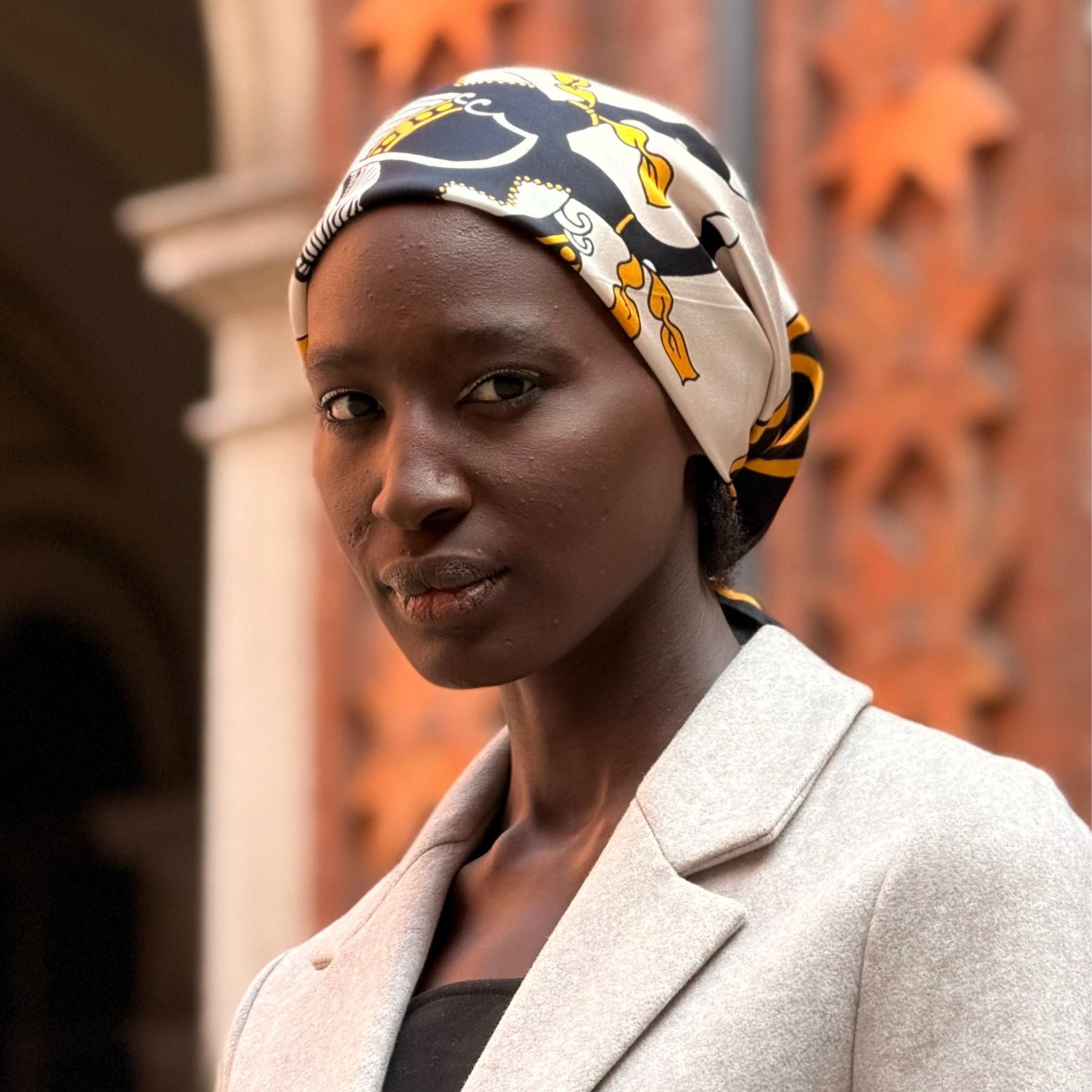
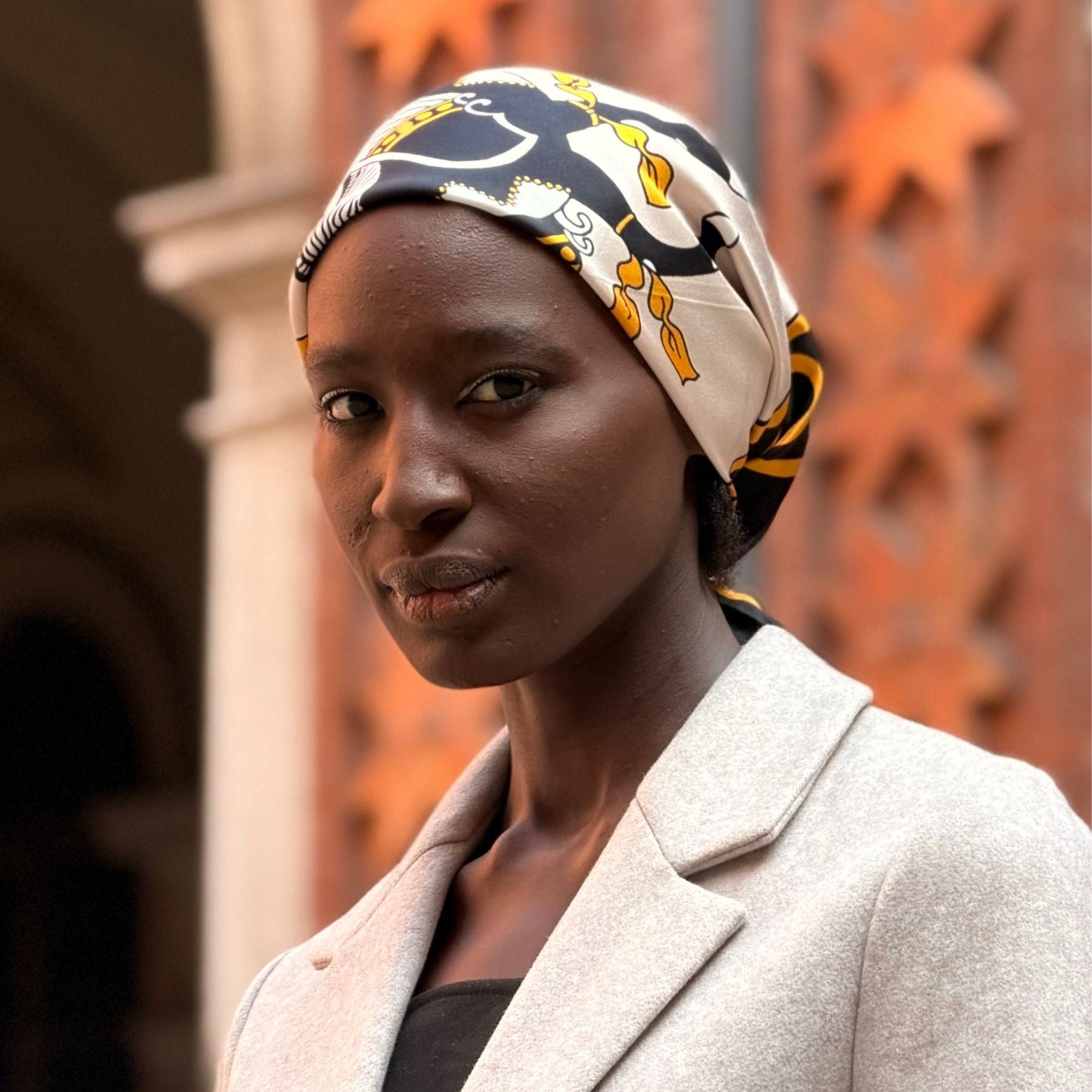
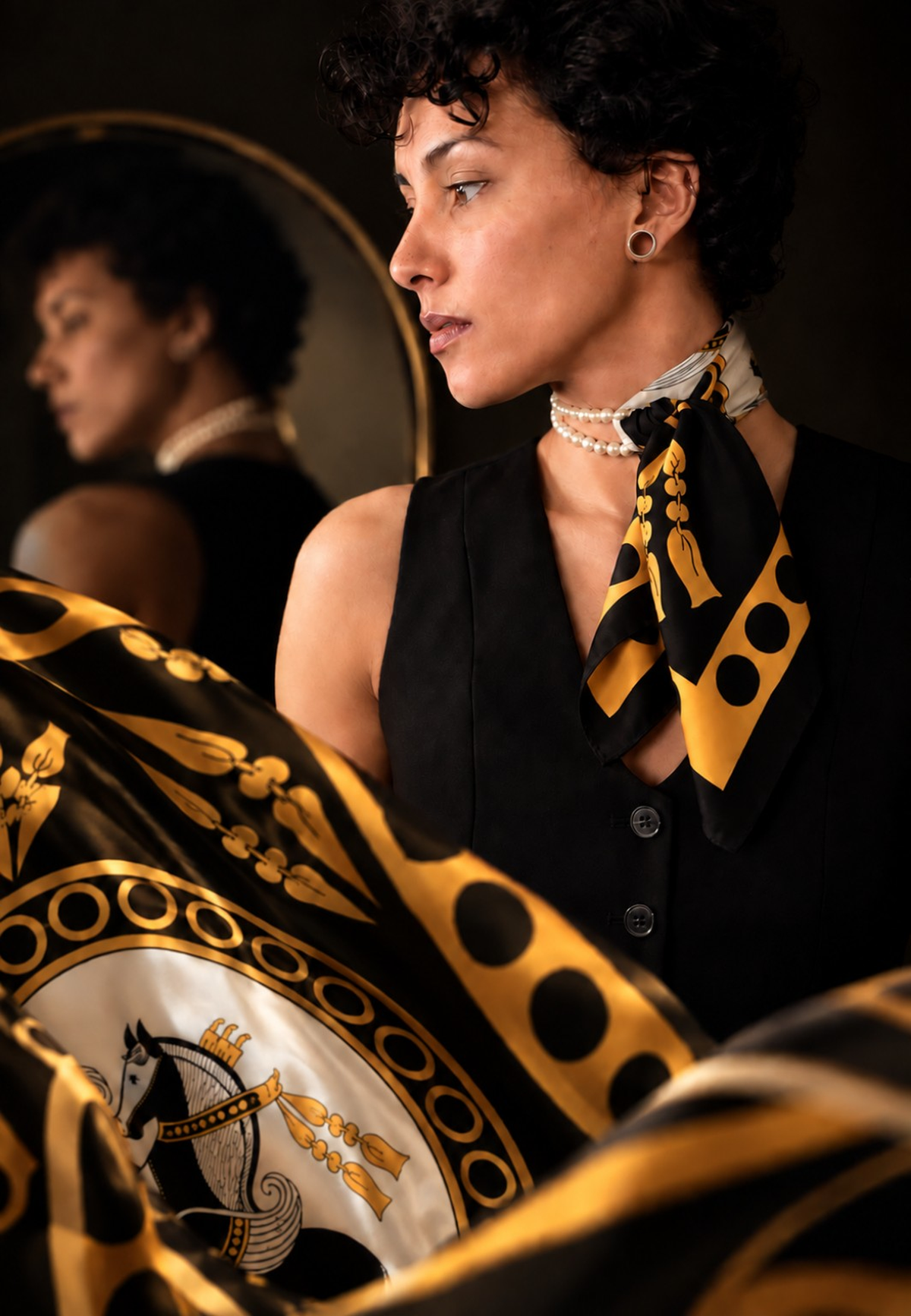
As the scarf is folded, wrapped or worn as a shawl, the composition changes. Parts of the pattern appear and disappear, creating new relationships between the winged forms and the surrounding ornament.

The historical motif is therefore no longer fixed. It becomes something dynamic — activated by the person wearing it.

From Heritage to Contemporary Design

This is how PARI-DAR connects historical visual culture with contemporary fashion.

The winged horse provides the starting point, but the final expression belongs to the present.

Ancient symbolism becomes pattern.

Movement becomes composition.

Ornament becomes texture.

Heritage becomes something that can be worn, moved and experienced.

PARI-DAR is a contemporary interpretation of an enduring image — one that carries the memory of Persian artistic traditions while becoming part of a modern wardrobe.