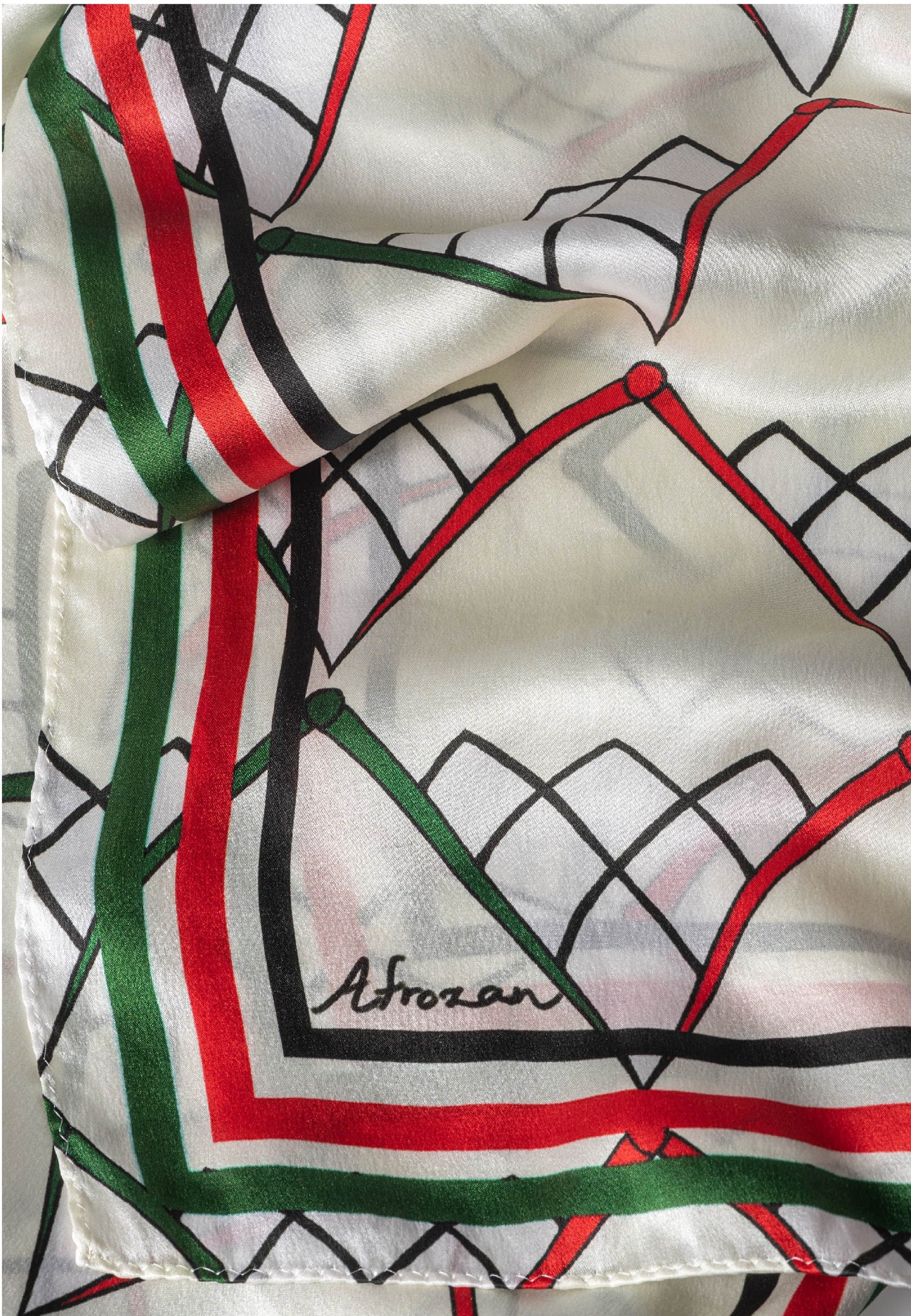
HASHTI — Inspired by the Borujerdi House

The Architecture Behind the Design
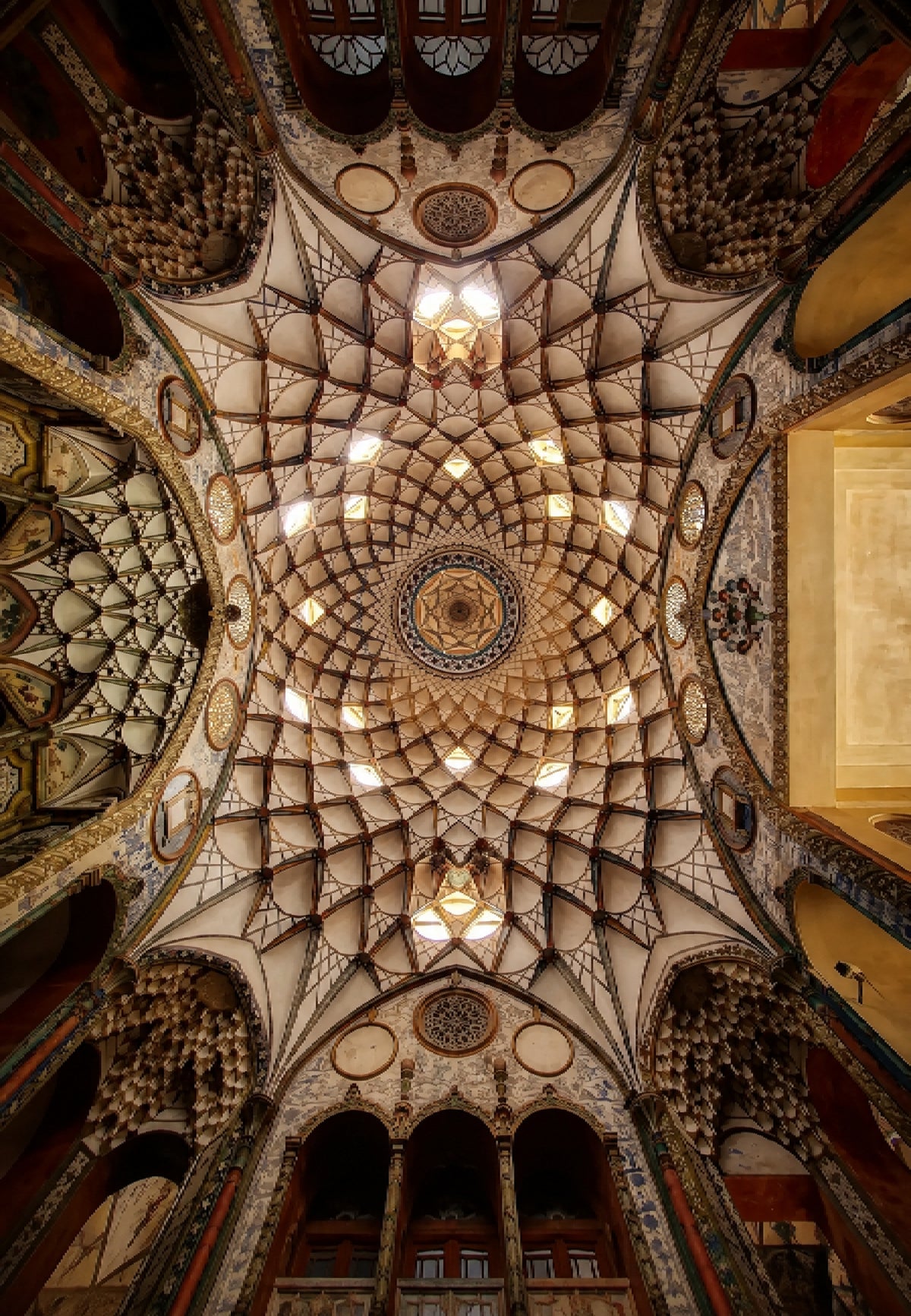
HASHTI draws inspiration from the Borujerdi House, one of the remarkable historic residences of Kashan. Its architecture brings together structure, ornament, climate, light and everyday life in a remarkably integrated way. For AFROZAN, the house is not simply a visual reference. It represents a way of thinking about form, colour, light, spatial harmony and craftsmanship — qualities that can be translated from architecture into contemporary design.

The Borujerdi House

The Borujerdi House is a remarkable example of historic residential architecture in Kashan, dating to the Qajar era. An inscription records the beginning of its construction in 1292 AH. Commissioned by a prominent carpet merchant, the house was designed and built under the direction of Master Ali Maryam Kashani, one of the important architects associated with historic Kashan.

Its construction and decoration involved more than 150 builders, plasterers, mirror workers and other artisans over approximately eighteen years. The grand entrance, central courtyard and water pool, windcatchers, muqarnas, frescoes, mirror work and coloured glass windows come together to create an architecture in which structure, ornament and everyday life exist in harmony.

Here, the building itself becomes a canvas for craftsmanship. Decorative details are not simply applied to the architecture; they become an essential part of the experience of the space, revealing the remarkable relationship between form, craftsmanship and everyday life.

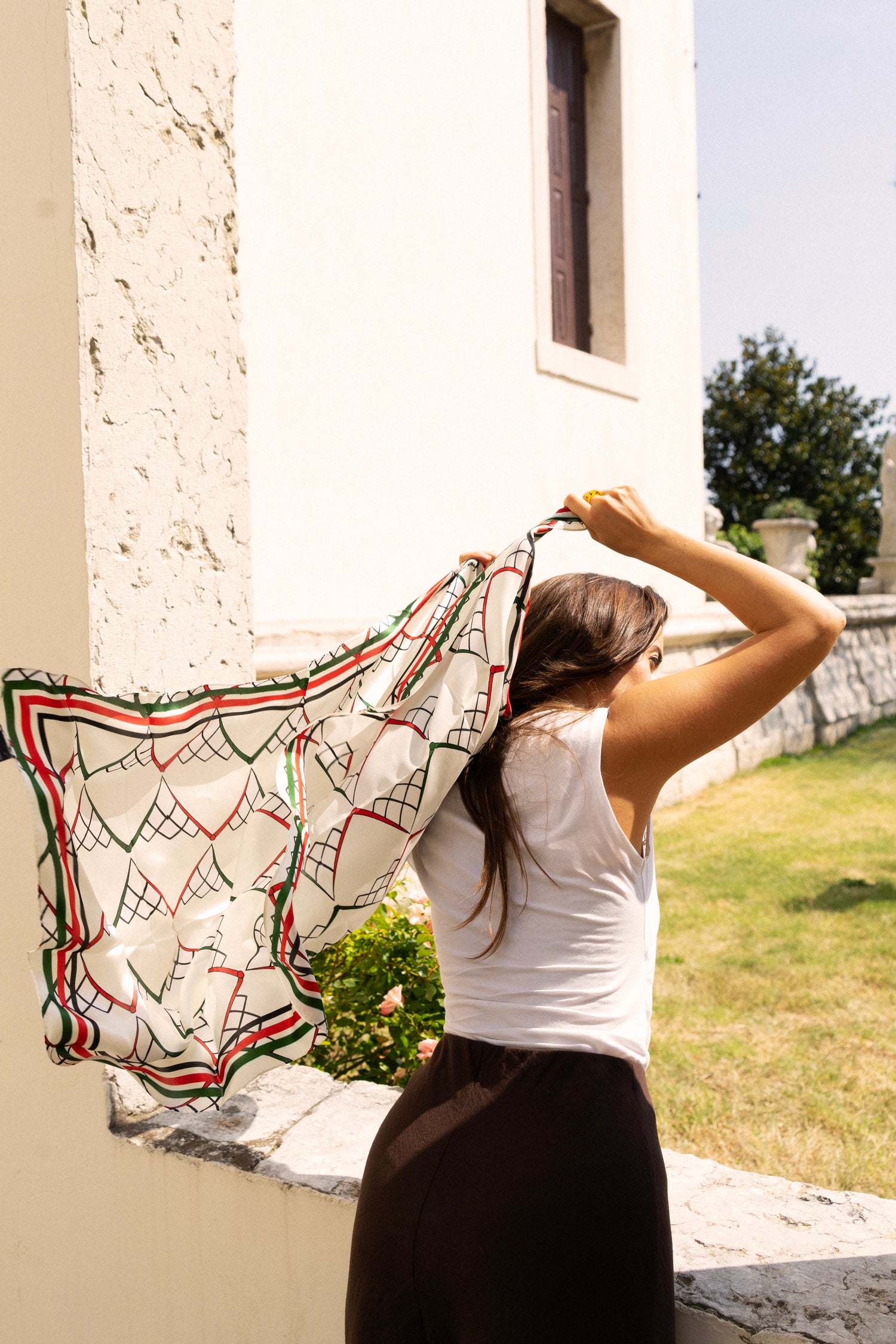
A woman outdoors holds up a lightweight silk scarf with a white base and a geometric pattern of red, green, black, and gray lines.

A House Built for Love

Behind the grandeur of the Borujerdi House lies a story of love and marriage.

According to the story associated with the house, Haj Seyed Hassan Natanzi, a wealthy merchant of Kashan, fell in love with a daughter of the prominent Tabatabaei family. When he asked for her hand in marriage, her father set a condition for the union: he should build a residence near the Tabatabaei House, worthy of the family and comparable in stature.

Seyed Hassan accepted the condition, and the construction of the house began.

What followed was not simply the construction of a home, but the creation of a remarkable architectural work.

Architecture Shaped by Climate

One of the most distinctive characteristics of the Borujerdi House is the way its architecture responds to the demanding desert climate.

Its famous windcatchers help circulate air through the building and contribute to cooling the interior. The house also contains different spatial arrangements for summer and winter, using orientation, sunlight, shade, ceiling height and ventilation to create more comfortable living conditions throughout the year.

Here, environmental intelligence is not separated from beauty. Architecture, climate, function and ornament become part of the same language.

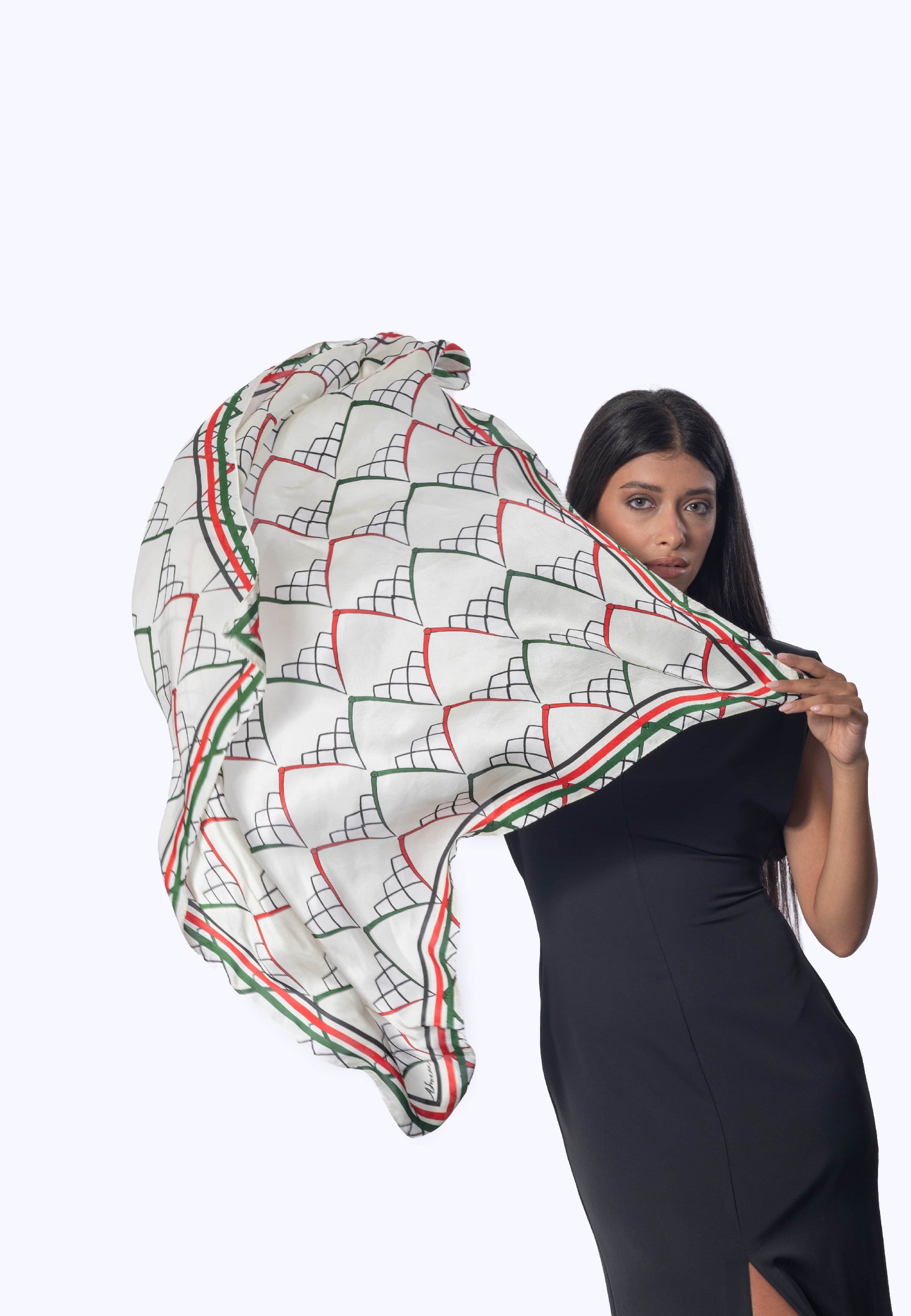
Silk Scarf - Sciarpa Seta sustainable sostenibile made in Italy - This is more than fashion

Light, Colour and Ornament

The Borujerdi House is particularly rich in decorative detail. Painted surfaces, plasterwork, mirror work, coloured windows, muqarnas and architectural ornament create changing relationships between light, colour and surface.

For AFROZAN, these elements are not reproduced literally.

Instead, we look at the principles beneath them.

Architecture becomes composition.

Colour becomes atmosphere.

Light becomes movement.

Ornament becomes detail.

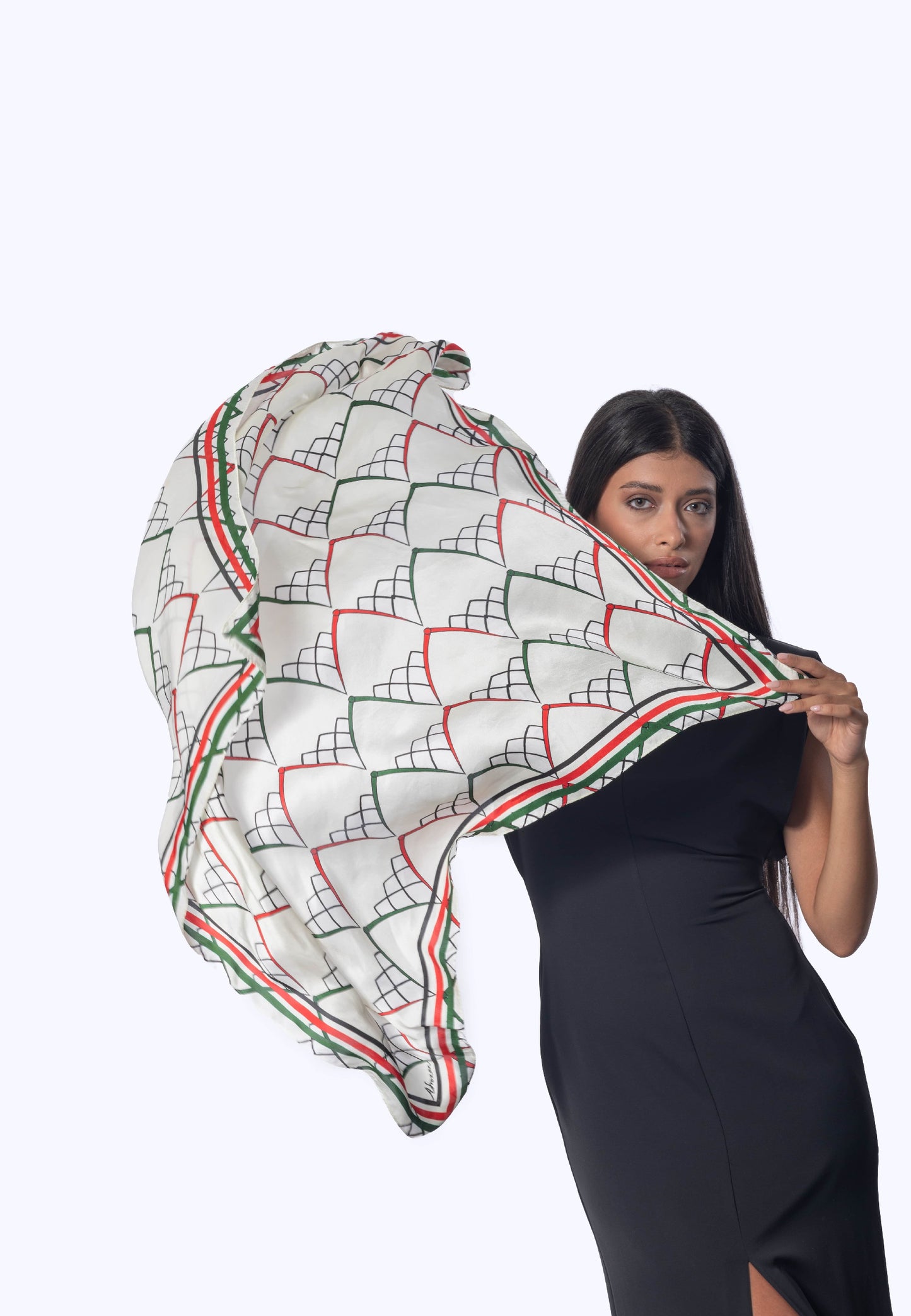
Silk Scarf - Sciarpa Seta sustainable sostenibile made in Italy - This is more than fashion

From Architecture to Silk

HASHTI translates these architectural qualities into a contemporary visual language.

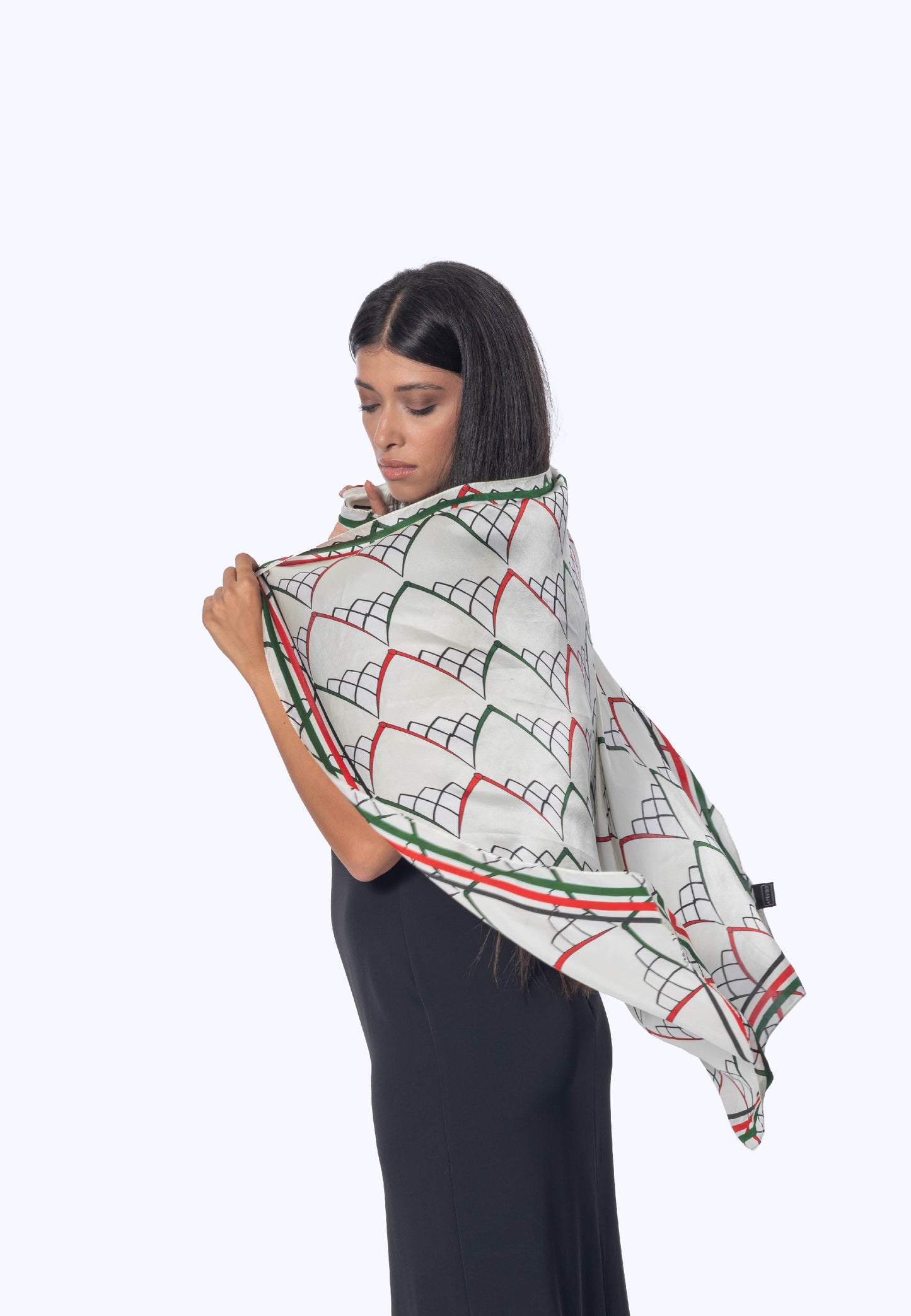
The design takes cues from the relationship between form, colour, detail and spatial harmony, transforming qualities traditionally experienced through architecture into something that can be worn and carried.

The scarf becomes a small, portable space for visual expression — allowing an architectural reference to move from a historic building into contemporary life.

From Heritage to Contemporary Design

We do not seek simply to reproduce historical forms. Instead, we look for the ideas beneath them: the relationship between structure and ornament, the movement of light, the rhythm of repeated forms, the intelligence of climate-responsive architecture and the balance between function and beauty.

HASHTI transforms these qualities into a contemporary accessory.

The architectural reference becomes pattern.

The spatial experience becomes composition.

The history becomes something wearable.